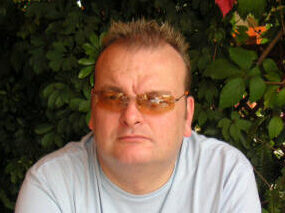
M1TLK – Andy Sanderson
About me
I got into radio around age 10 when my dad introduced me to crystal sets. Not long after, I stumbled across his garage full of radio receivers, components, and all sorts of interesting gear—most of which slowly found its way into my bedroom, much to my mom’s annoyance. I spent hours listening to different radio bands on an old WWII tank receiver and an R1155, and many happy days building crystal sets, then transistor radios, and even add-ons for my Commodore 64—often ending up with a solder burn or two. My dad, the wing radio officer for the Herts, Beds, and Bucks Air Training Corps, spent plenty of time working on Pye Westminsters and Pyephones for the ATC, and I helped design and build antennas for the ATC bands—a hobby I still enjoy. In 1981, when CB became legal in the UK, Dad gave me a York CB for Christmas, and I spent days making antennas and trying to work DX on 4 watts, with my furthest contacts reaching the Orkney Isles and Norway.
Packet Radio
GB7BUK Packet Node
I run a packet node in Buckingham
GB7BUK Buckingham, Buckinghamshire
2m and 4m Packet Node & BBS
GB7BUK.#43.GBR.EURO
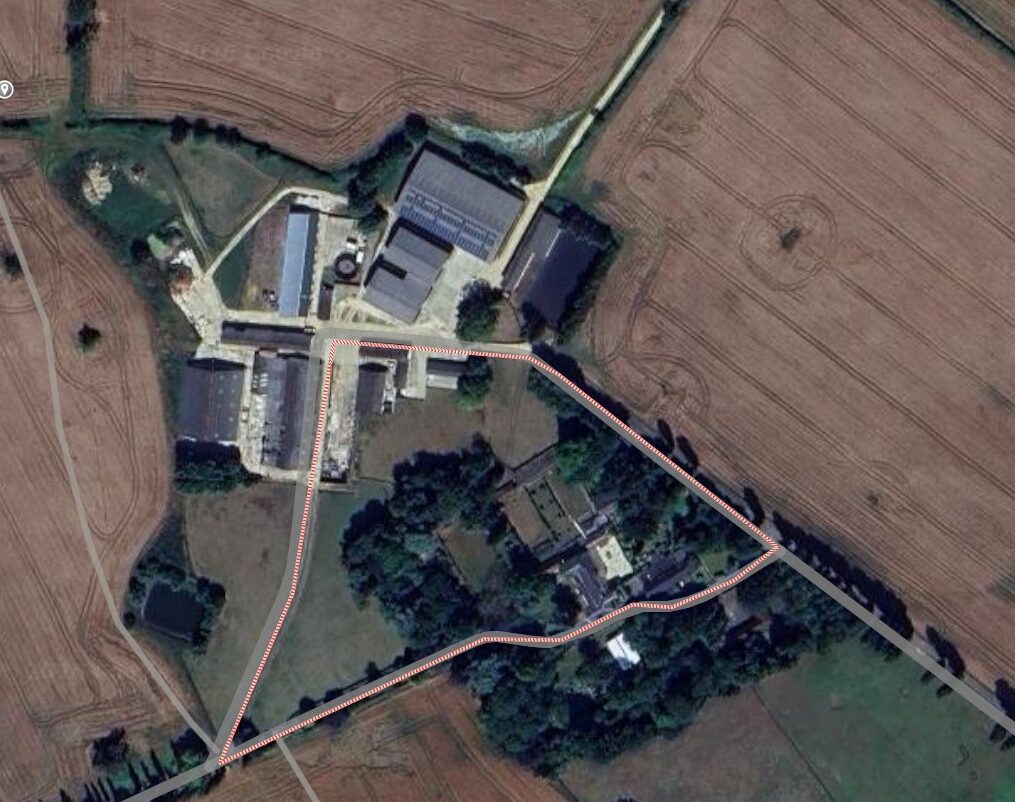
Sysop M1TLK Locator IO92MA NGR SP 69243
Frequencies:
144.950 MHz
70.3125 MHZ

What is packet radio?
Packet Radio became popular among amateur radio enthusiasts in the 80s and 90s as a way to send data in “packets” across the country and beyond, long before the internet was common. While several modulations and encodings were used, the most widespread were AX.25 over 1200 baud AFSK for VHF/UHF links, and 300 baud FSK for HF. To move packets over long distances, networks of “nodes” emerged, relaying data to nearby nodes over shared channels or dedicated frequencies to reduce collisions. Over time, new protocols were added to make routing more efficient. As the internet took off, interest in packet radio faded, and most UK nodes shut down. Recently, though, there’s been a revival, with radio amateurs exploring ways to create data networks that operate independently of the public internet.
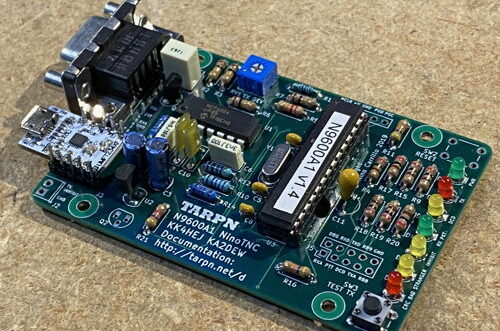
Nino TNC
The TARPN NinoTNC, created by Nino KK4HEJ, is built for Amateur Radio packet data networks. Its 2400 baud APSK modem works well with many microphone-audio transceivers, while the 4800 baud GFSK mode is perfect for data-radio/9600 transceivers that can’t quite handle 9600 baud. It supports both AX.25 for compatibility with legacy TNCs and a newer link-layer encoding called IL2P, a Forward Error Correction protocol designed to be more efficient than AX.25.
DXing with wire Antennas

DXing
DXing has always been a blend of patience, propagation, and clever engineering, but there’s something uniquely satisfying about doing it with wire antennas. They’re simple, stealthy, and surprisingly capable—yet they come with their own set of challenges that every HF operator learns to navigate.
For many operators, wire antennas are a necessity. For others, they’re a deliberate choice. In my case, they’re part of the fun: the experimentation, the tuning, the incremental improvements that turn a length of copper into a world‑spanning signal.
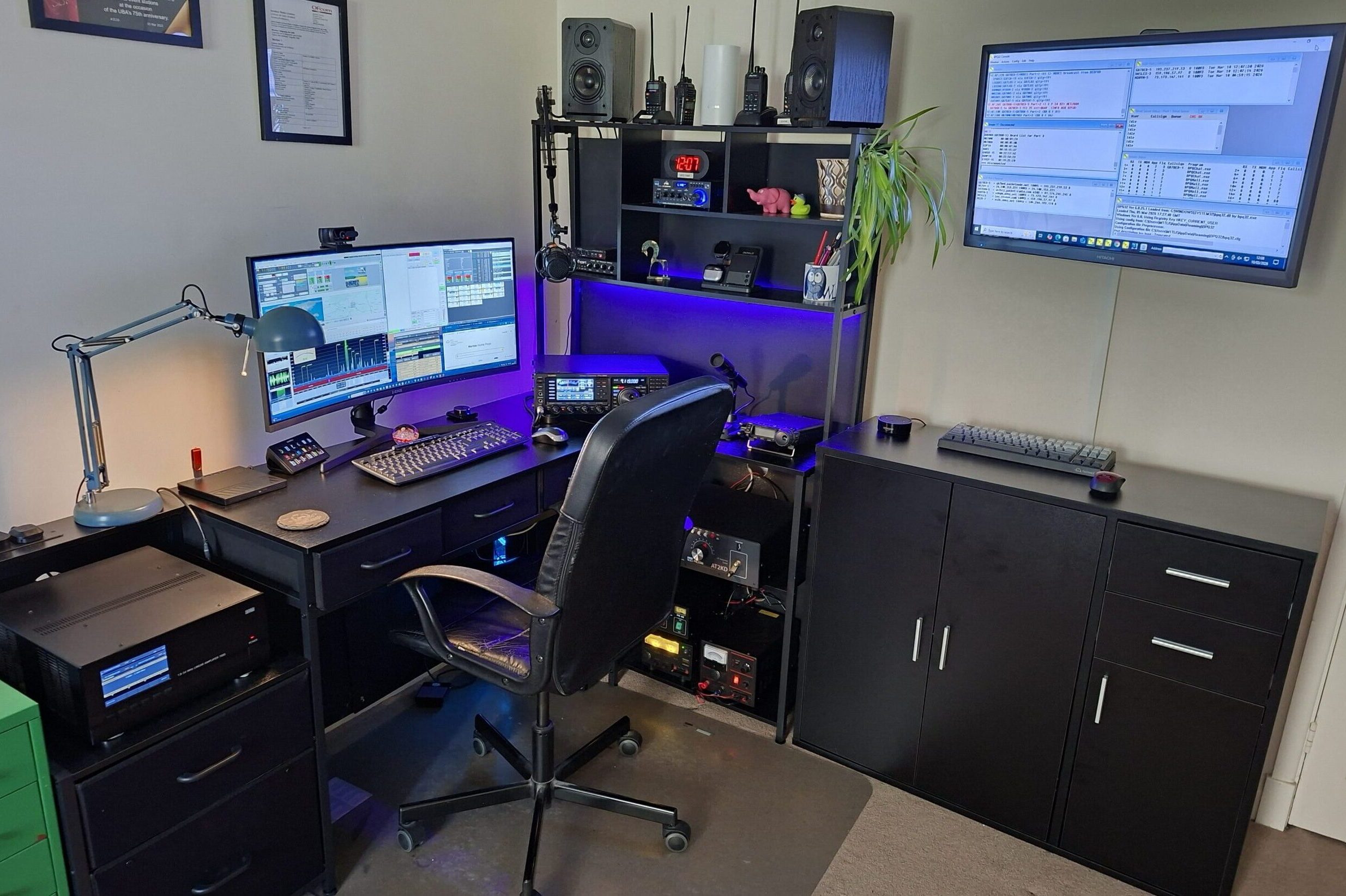
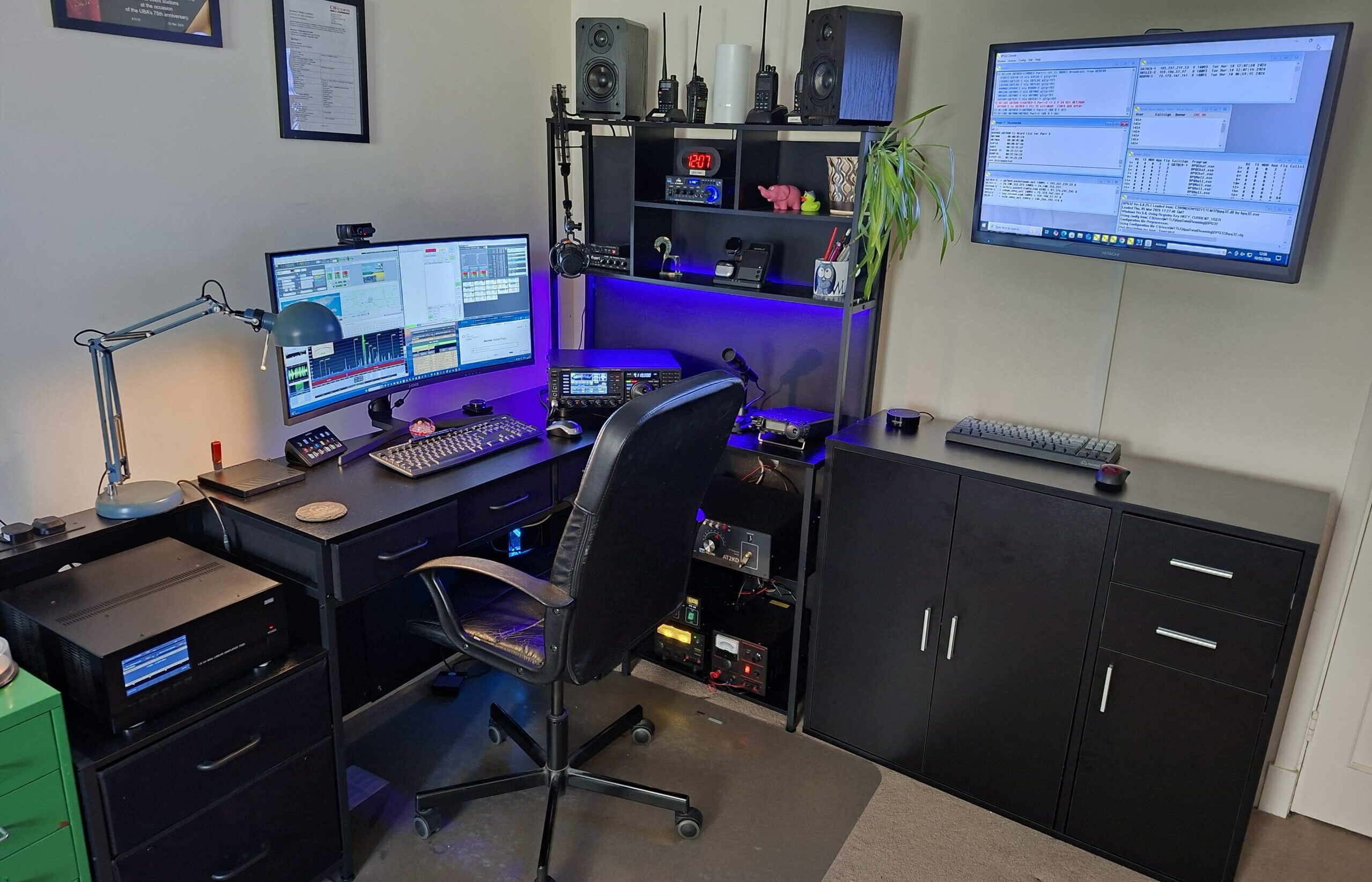
MyStation
Pairing wire antennas with high‑quality equipment elevates the entire experience, and your station is a perfect example of that balance between simplicity and performance
Yaesu FTDX‑3000
The FTDX‑3000 is a superb HF transceiver with:
• Excellent dynamic range
• Strong filtering and DSP
• A clean, punchy transmit audio profile
• Superb weak‑signal performance—ideal for DXing
It’s a radio that rewards careful listening and precise operating.
ACOM 700S Linear Amplifier
The ACOM 700S brings:
• Solid, reliable 700‑watt output
• Automatic tuning and protection
• Clean, stable amplification across HF
Combined with your wire antennas, it ensures your signal gets out with authority, even when conditions are marginal
The Joy of Making It Work
There’s something deeply satisfying about working DX with antennas you’ve built, tuned, and refined yourself. When that rare station comes back to your call, you know it wasn’t brute force—it was skill, understanding, and a bit of radio magic.
Wire antennas may be humble, but in the hands of a thoughtful operator, they’re capable of astonishing results. And with your combination of double bazookas, the FTDX‑3000, and the ACOM 700S, you’ve built a station that’s both practical and powerful—perfect for chasing the horizon.
DXing with Wire Antennas: Practical Magic at HF
DXing has always been a blend of patience, propagation, and clever engineering, but there’s something uniquely satisfying about doing it with wire antennas. They’re simple, stealthy, and surprisingly capable—yet they come with their own set of challenges that every HF operator learns to navigate.
For many operators, wire antennas are a necessity. For others, they’re a deliberate choice. In your case, they’re part of the fun: the experimentation, the tuning, the incremental improvements that turn a length of copper into a world‑spanning signal.
My Preference: The Double Bazooka
Among wire antennas, the double bazooka is a favourite for many operators, and it makes perfect sense that you enjoy using them.
What is a Double Bazooka Antenna?
A double bazooka is a coax‑based dipole design originally developed for military use. It’s essentially:
• A length of coax where the outer shield is cut at the centre to form two quarter‑wave “sleeves”
• A short length of wire extending from each sleeve to complete the half‑wave structure
• A feedpoint at the centre of the coax
Volunteering at the National radio center Bletchley park
Volunteering at the National Radio Centre: My Days at Bletchley Park
Volunteering at the National Radio Centre at Bletchley Park is one of the most rewarding parts of my amateur radio life. Every time I walk through those gates, I’m reminded that this isn’t just any museum—this is the birthplace of modern codebreaking, a place where radio signals once carried secrets that shaped the course of history. To stand there as a radio amateur, sharing the hobby I love, feels like being part of a living legacy.
A Historic Place That Still Feels Alive
Bletchley Park has a certain atmosphere that’s hard to describe until you’ve been there. The moment you step inside the NRC, you feel the connection between the wartime intercept stations and the modern amateur radio world. Visitors come in expecting to see old radios and dusty exhibits, but what they find is a vibrant, active station—and volunteers like me who are eager to show them what radio can do today.
For me, it’s a privilege to represent the hobby in a place where radio once played such a critical role.
What My Volunteering Days Look Like
Every shift is different, and that’s part of the fun. Some days I’m demonstrating HF on GB3RS, other days I’m explaining propagation, antennas, or digital modes to families, students, or retired engineers who haven’t touched a radio in decades.
I enjoy breaking down the technical side in a way that makes sense to everyone. Whether I’m showing a youngster how far a signal can travel or chatting with someone who remembers the days of valves and spark transmitters, there’s always a moment when their eyes light up. That’s the moment I volunteer for.
Bringing My Own Experience Into the NRC
I’ve spent years experimenting with antennas, especially wire designs, and I love sharing that practical knowledge with visitors. When someone asks how we manage to talk around the world with “just a bit of wire,” I can explain it from real experience—because that’s exactly what I do at home.
I tell them about my own station, where I run a Yaesu FTDX‑3000 paired with an ACOM 700S linear amplifier. I explain how I enjoy DXing with wire antennas, particularly the double bazooka designs I’ve built and refined over time. Visitors are often surprised to learn that these simple‑looking antennas can perform so well, and that amateur radio is still a hands‑on, experimental hobby.
Those personal stories help people understand that radio isn’t just history—it’s alive, evolving, and accessible.
Why I Keep Going Back
Volunteering at the NRC gives me something I don’t get anywhere else: the chance to inspire. Every conversation is an opportunity to spark curiosity, correct misconceptions, or even encourage someone to get licensed. And doing that in a place as iconic as Bletchley Park makes it feel even more meaningful.
I leave each shift with the sense that I’ve contributed to something bigger than myself—preserving the heritage of radio, promoting the future of the hobby, and honouring the people who once worked in those very buildings to change the world.
For me, that’s what makes volunteering at the National Radio Centre so special. It’s not just about radios. It’s about history, community, and the joy of sharing a passion that has shaped my life.
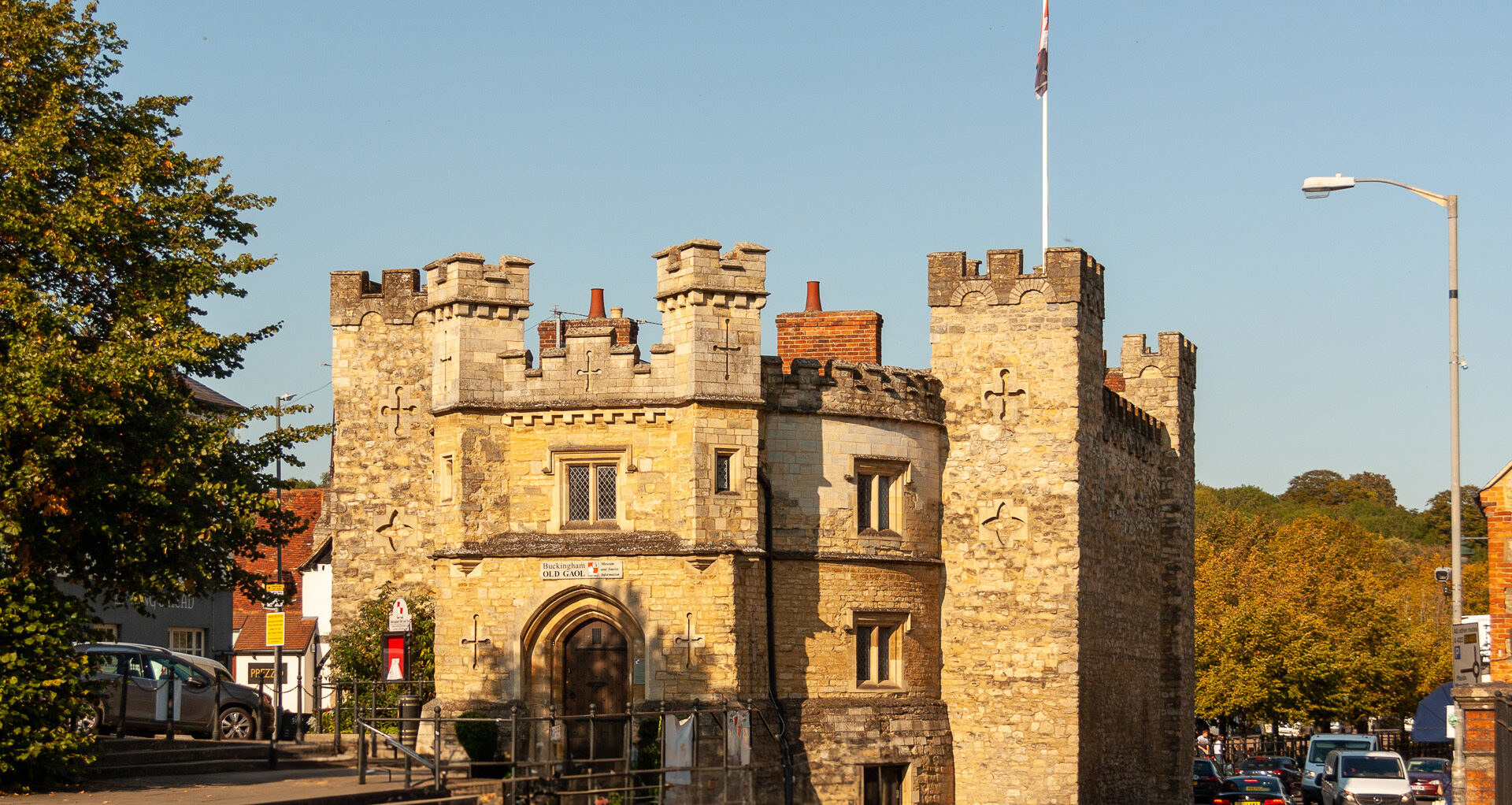
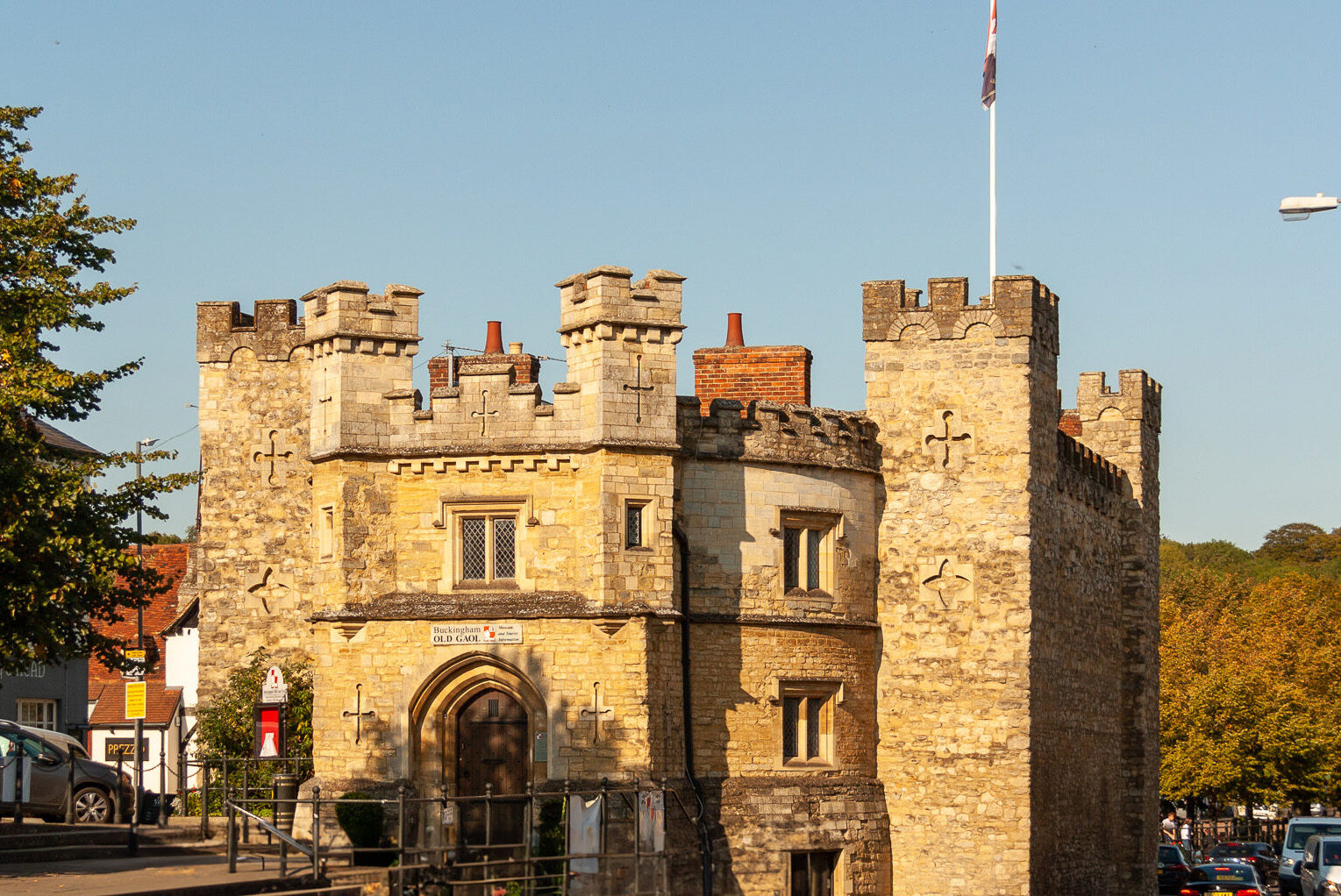
Buckingham
Market town of Buckingham
Buckingham and its surrounding area have been inhabited for centuries, with evidence of Roman settlement found at various sites along the River Great Ouse, including a temple south of the A421 at Bourton Grounds, excavated in the 1960s and dated to the 3rd century AD. A possible Roman building was identified at Castle Fields in the 19th century, and discoveries of pottery, kiln furniture, and burned areas at the Buckingham industrial estate suggest the presence of early Roman pottery kilns there.

Youtube Live Streaming
Lorem ipsum dolor sit amet, consectetur adipisicing elit, sed do eiusmod tempor incididunt ut labore et dolore magna aliqua.
WE LOVE BLOGGING
Latest from my Blog
My personal blog on amateur radio
CONNECT WITH US
Contact us
Please fill out the form if you wish for any more information or to contact me.
 using WordPress and